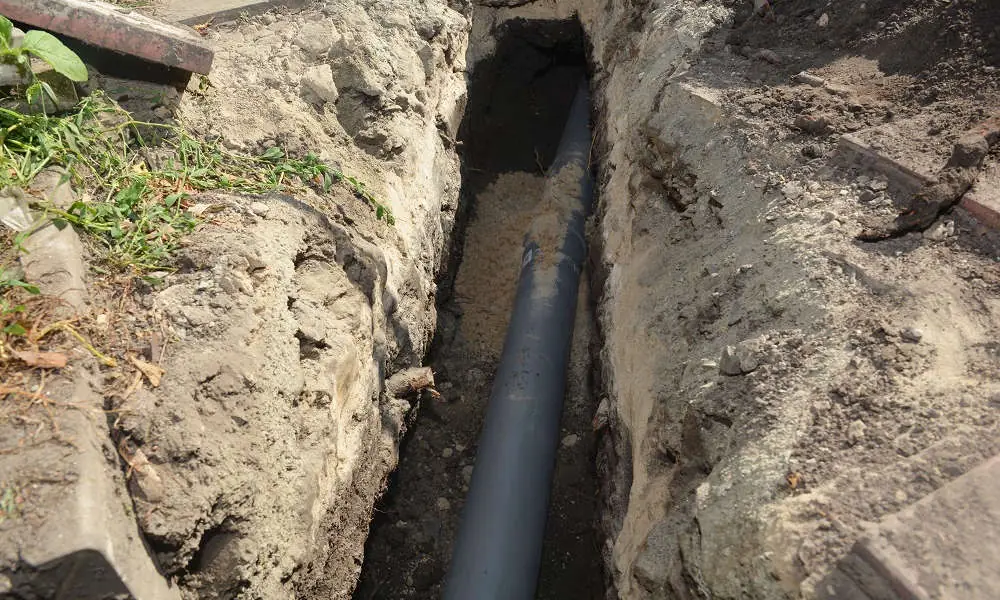
The old pipe is done. We'll replace it without trenching the yard.
Pipe bursting pulls a new seamless HDPE line through the path of the old one, breaking the failed pipe outward as it goes. Two small access pits instead of a trench from the house to the street.
- 5.0 on Google · 157 reviews
- Same-day service
- Camera inspection included
- CSLB #1092432
 YelpYelp
Guaranteed GoogleGoogle
Guaranteed BBBBBB
Accredited
Camera-verified · Upfront written price · Same-day
Tap what's happening at your house.
Signs replacement beats another repair
Your result
Nothing checked yet.
Tap a symptom or two. Most homeowners recognize at least one.
Why laterals here reach replacement
- 01Original clay from the 50s and 60sShort jointed sections that shift, crack and eventually come apart under decades of ground movement.
- 02Cast iron rusted throughCorrosion works from the inside out. Once the bottom of the pipe is gone, there's no wall to build on.
- 03Bad original grade or settlingA section that dropped will always hold water. Only a new line at proper fall fixes that.
We diagnose first, then you choose
Trenchless bursting keeps your driveway, lawn and patio largely intact and finishes faster. Open trench still makes sense in a few situations — very shallow lines, tight utility conflicts, or when the route itself has to change.
Trenchless pipe bursting
Best for most Cerritos-area laterals: two access pits, new seamless HDPE, surfaces preserved.
Open-trench replacement
Best when utilities crowd the path, the line is very shallow, or the route needs to be rerouted.
See sewer line replacementFrom footage to a new line on the same path
- 01
Camera, locate, permit
We confirm the route and depth, quote it in writing, and pull the permit your city requires.
- 02
Open two small pits
One at the house end, one near the connection. Everything between them stays as it is.
- 03
Pull the new line
The bursting head breaks the old pipe outward while the new HDPE line follows behind it in one continuous piece.
- 04
Tie in, camera, restore
Connections made, city inspection met, footage handed over, pits backfilled and compacted.
You'll see the number before we start
Replacement is quoted in writing after the camera run and locate. Nothing gets added later. What drives it:
- Length of the run and depth of the line.
- What sits at each access point — lawn versus concrete or hardscape.
- Diameter, including whether you're upsizing.
- Permit, inspection and any required city connection work.
“They replaced our sewer line without tearing up the driveway. Clear pricing, city inspection handled, and they cleaned up completely.”
Questions we get on the phone
Lining rebuilds the inside of your existing pipe, so the old pipe has to still be there. Bursting removes the old pipe's shape entirely and installs a brand new line, which is what a collapsed or badly settled lateral needs.
Based in Cerritos, on the road across Orange County and the South Bay every day.
Based in Cerritos. Serving Orange County and the South Bay, most calls get a same-day slot.
The pipe is done. Let's replace it once, properly.
Call and a real person from the crew picks up. We'll show you the footage and quote the replacement in writing before anything is dug.
The old pipe is done. We'll replace it without trenching the yard.
Tell us what's going on. A real person from the crew calls you back with a straight answer and a flat price.